

Miami / South Florida: The U.S. Gateway

Connectivity, institutional relationships, language support and a dense clinical ecosystem have made South Florida the default U.S. gateway for much of the Caribbean.
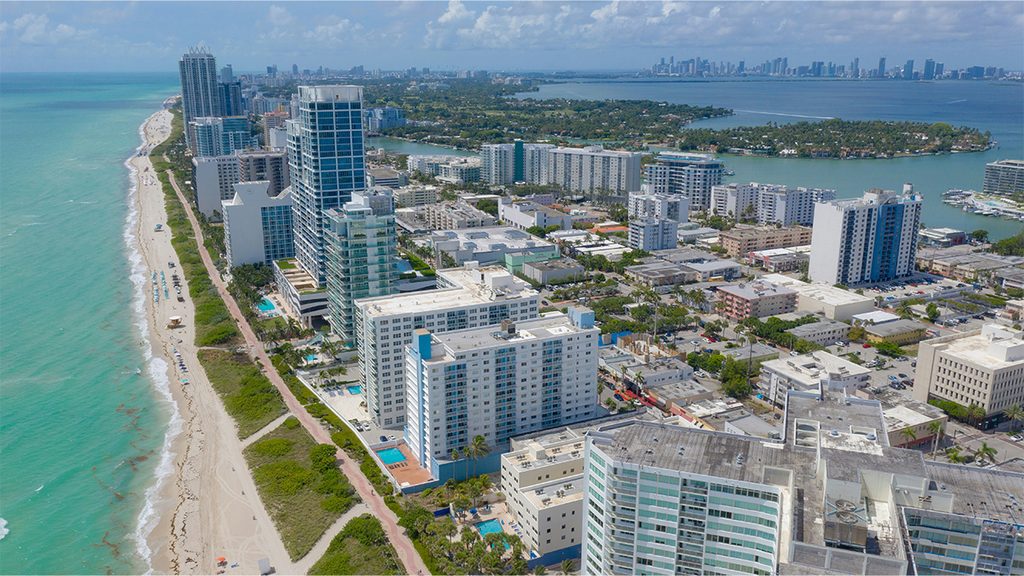
For much of the Caribbean, seeking care in the United States has long meant, specifically, going to Miami. South Florida is the region’s most established U.S. gateway: close to many islands, deeply connected by air, familiar with Caribbean languages and cultures, and supported by clinical systems that have built international-patient pathways.

The first advantage is connectivity. Miami International Airport describes itself as the largest U.S. gateway to Latin America and the Caribbean, and its network continues to add Caribbean routes. Direct service does not make a transfer simple, but it reduces the number of handoffs and missed-connection risks built into the journey.
The second advantage is relationship. Caribbean clinicians, insurers, employers and families have decades of institutional and personal ties in South Florida. Those ties create practical knowledge: who to call, where to send records, which international office can coordinate an appointment and where relatives can stay. Baptist Health International, for example, maintains around-the-clock coordination for referrals and admissions and an in-country manager network across Latin America and the Caribbean.
The third advantage is breadth. South Florida offers a dense mix of adult and pediatric hospitals, cancer care, cardiovascular services, orthopedics, neurology, transplantation and rehabilitation. The city functions not as a single hospital but as an ecosystem. A patient can enter through one pathway and be redirected within the metropolitan area when the case requires a different level or type of expertise.
The fourth advantage is cultural permeability. English, Spanish and Haitian Creole are widely used, Caribbean communities are visible, and international-patient teams routinely address travel, interpretation, financial clearance and family logistics. None removes the stress of leaving home for care, but each reduces friction.
Miami remains part of the U.S. health system. Prices can be high, financial clearance may be required before non-emergency care, and patients and accompanying relatives must be able to enter the United States. These conditions place the route mainly within insured, publicly funded, employer-sponsored or self-paying pathways. Continuity after return is another vulnerability: records, medication changes and follow-up plans must cross the same border as the patient.
Miami is both an asset and a concentration of dependency.
The strategic lesson is therefore double. Miami is an extraordinary regional asset because it combines capability, connectivity and established relationships. It is also a concentration of dependency. A resilient Caribbean access strategy should use the gateway deliberately while maintaining alternatives, formalizing data return and avoiding a model in which one metropolitan area becomes the sole thread holding complex care together.
Share:

